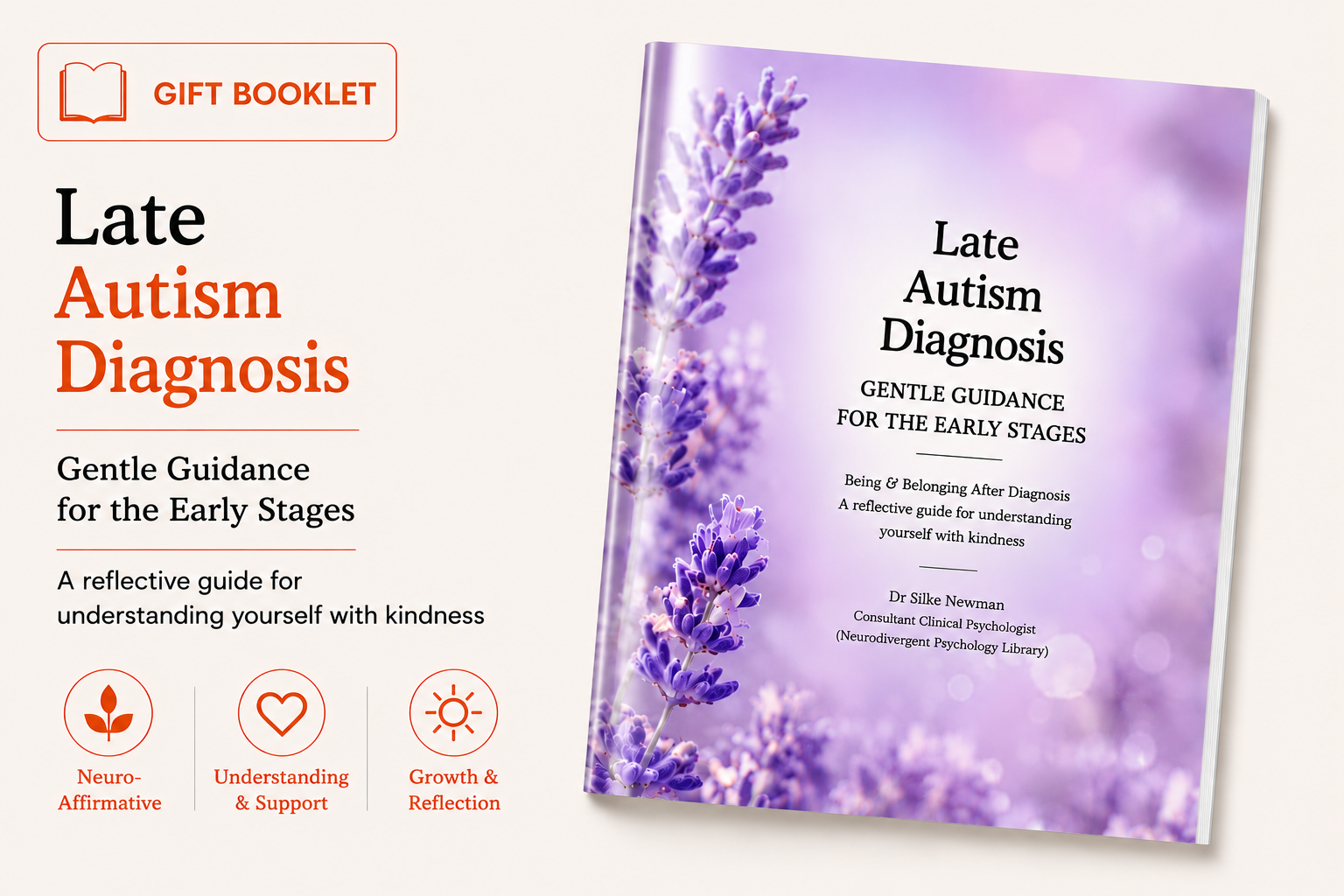
Late Autism Diagnosis Gift Booklet
A Gentle Guide for the Early Stages.
A diagnosis is not just an answer — it can be the beginning of a new chapter.
Whether this booklet found its way to you through your own journey, or you were pointed into its direction by someone who cares about you, it is an invitation to pause, reflect, and understand yourself with greater kindness.
For many people, discovering they are neurodivergent brings a mixture of emotions: relief, recognition, questions, grief for what was misunderstood, and hope for what comes next.
This booklet was created as a companion through that process — a space to explore your story, recognise your strengths, understand your needs, and reconnect with yourself beyond expectations of who you were told you should be.
Sometimes the greatest gift we can receive is not advice, answers, or a plan for who we should become.
It is the chance to understand ourselves.
This booklet is for the person discovering themselves in a new way — after years of trying, adapting, questioning, or feeling different without knowing why.
It is a gentle companion for the journey after diagnosis: a place for reflection, self-kindness, and recognising the strengths, needs, and experiences that have always been part of your story.
Given to yourself, or gifted by someone who cares, it carries a simple message:
You are allowed to know yourself better.
You are allowed to honour what you need.
And you are allowed to grow in a way that feels true to you.
Inside you will find reflections on:
Grief, adjustment, and letting go of shame
Grief, anger, and adjustment — making room for the difficult emotions that can accompany diagnosis, alongside relief
Letting go of shame and self-blame — reframing past struggles as difference, not failure
Self-understanding and validation — how an autism diagnosis brings clarity to years of experiences that never quite fit
Embracing strengths and differences — recognising the strengths that are often overlooked
Social and sensory needs — understanding sensitivity, overwhelm, and what helps you regulate
Learning your signals — tuning in to interoception and the body's quieter cues
Sensory joy — making room for the textures, sounds, and colours that soothe and delight
Monotropism — why attention is drawn deeply to one thing at a time, with its strengths and costs
Energy and capacity — treating energy as a limited, fluctuating resource
Burnout and energy accounting — noticing what costs energy and what restores it
Masking — recognising its hidden cost and finding safe places to unmask
Reframing past experiences — re-reading your own history with new understanding
Relationships and communication — finding language to explain your needs
The double empathy problem — why misunderstanding goes both ways, not one
Finding community and belonging — the relief of shared experience
Developing self-advocacy — recognising and asking for the support you're entitled to
Re-evaluating life choices and priorities — building a life around your values and needs
Improved mental health and well-being — how self-understanding supports recovery
Becoming more authentically yourself — reconnecting with parts that may have been hidden
Looking forward — growth as a non-linear, ongoing journey
Recommended and Further Reading for Each Chapter
Please note: this resource is for educational and reflective purposes only. It is not a substitute for individual psychological assessment, diagnosis, therapy, or medical advice. If the material raises difficult feelings, consider seeking support from a qualified professional.
Want to gift this Booklet in print to somebody you care about?
Explore more resources