AUDHD Understand How Your Brain Works - Strengths, Stress, Regulation and Growth
Purpose of this model
This model is designed to help adults with AuDHD understand common patterns of regulation, stress, strengths, and growth. AuDHD describes the experience of having both autistic and ADHD neurodevelopmental traits. Rather than viewing difficulties as personal failings, this model reframes experiences as differences in nervous system regulation.
A neuro-affirmative perspective
From a neuro-affirmative standpoint:
• Neurodivergent brains represent natural human variation.
• Regulation differences influence attention, energy, emotion, and behaviour.
• Inconsistency often reflects fluctuating regulation capacity rather than motivation or effort.
• Strengths and challenges are closely linked.
Understanding opposing regulation needs
Many adults with AuDHD experience simultaneous needs for predictability and novelty, structure and autonomy, deep focus and movement, or quiet recovery alongside stimulation. These opposing needs can create internal tension, leading to cycles of intense engagement followed by exhaustion or disengagement.
Common lived experiences
You may notice patterns such as:
• setting routines but struggling to maintain them
• hyperfocus followed by derailment
• feeling overstimulated yet bored
• rapid idea generation alongside difficulty completing tasks
• strong attention to detail alongside big-picture thinking
These patterns reflect regulatory oscillation rather than inconsistency of character.
Over-expression under stress
When autistic regulation dominates under stress, experiences may include rigidity, intolerance of change, withdrawal, or cognitive looping.
When ADHD regulation dominates under stress, experiences may include impulsivity, emotional reactivity, task inconsistency, and rapid shifting between activities.
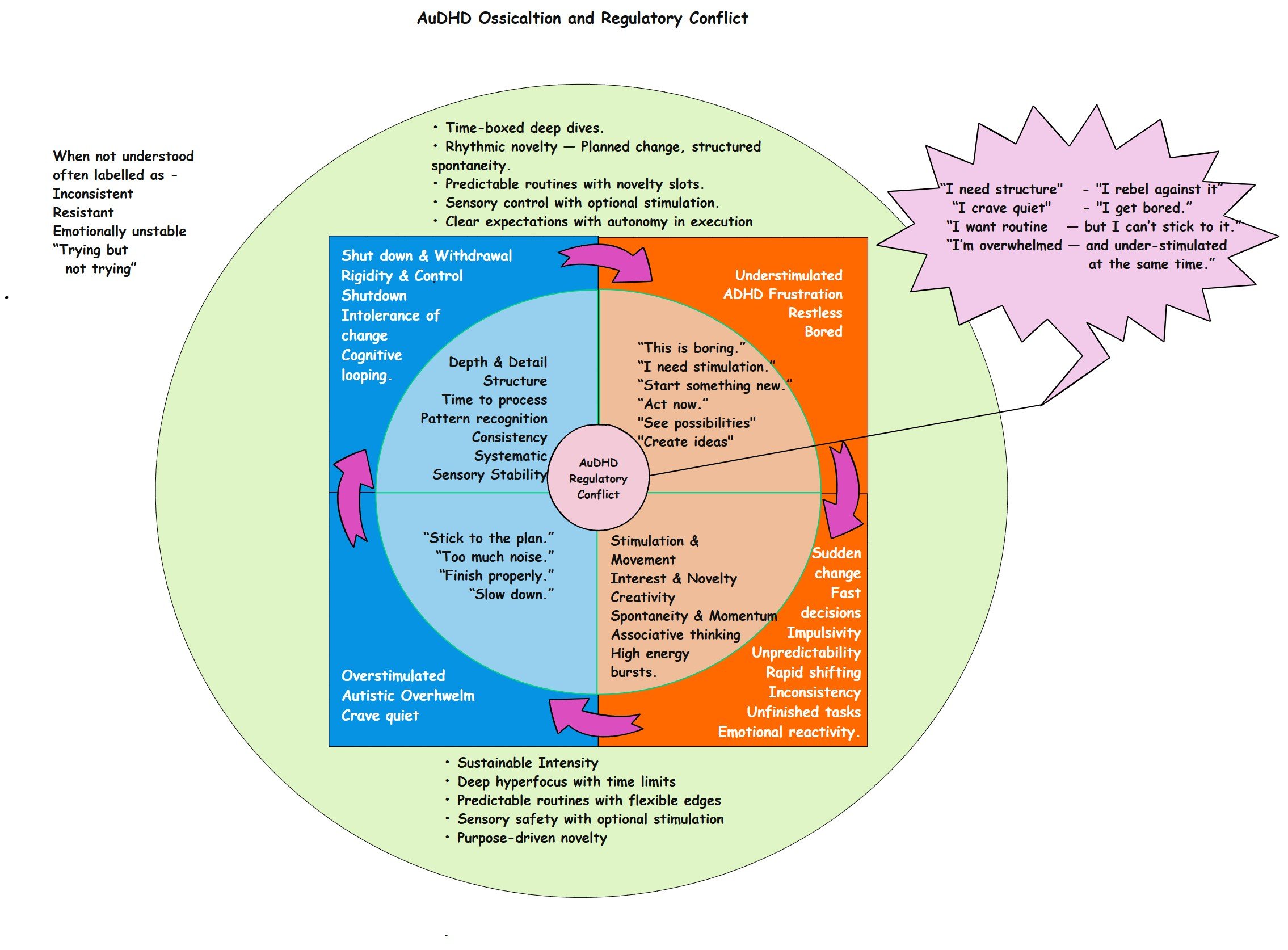
Regulatory oscillation
The model highlights oscillation between predictability-seeking and novelty-seeking regulation. Individuals may feel exhausted but mentally active, overstimulated yet under-engaged, or simultaneously seeking safety and stimulation.
Triggers that reduce regulation
Common triggers include environments requiring constant flexibility or rigid compliance, sustained masking, high cognitive load, sensory overwhelm, fatigue, or lack of autonomy.
Regulation supports
Autistic regulation may benefit from predictability, sensory stability, processing time, recovery periods, and reduced environmental demand.
ADHD regulation may benefit from movement, stimulation, novelty, emotional engagement, shorter task cycles, and flexible pacing.
Growth direction
Growth involves developing self-designed regulation strategies rather than masking differences. This may include rhythmic novelty, structured spontaneity, predictable routines with safe variation, and scaffolding environments that support capacity.
For adults
Click to download PDFs
For parents
Click to download PDFs
For kids
Click to download PDFs
For teachers
Click to download PDFs
Using this model practically
This model can be used for personal reflection, therapy, workplace adjustments, or collaborative planning. Individuals are encouraged to identify which elements resonate most and adapt supports accordingly.
Model note
This model describes regulatory tendencies rather than fixed traits. Experiences vary across individuals and across time. Understanding regulation can reduce self-blame and support sustainable functioning.